
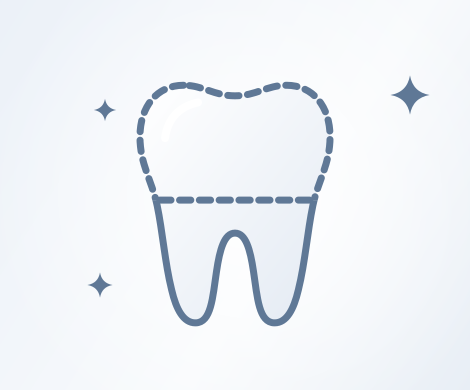
1What to choose
If the tooth is missing completely, an implant with a crown is often the best option. Read more on the implants page.
2What we make crowns from
- Lets light through like natural enamel
- Suitable for veneers and inlays
- Less strong than zirconia
- Very strong
- Withstands the load on chewing teeth
- Slightly less translucent than E-max
- A time-tested option
- Strong
- The frame may show at the gum line
- Looks less natural on front teeth
All three materials cost the same, so the doctor chooses the material for the task, not the budget.
3How treatment works
- 1Consultation and planThe doctor examines your teeth, orders X-rays if needed, explains the options and tells you the cost. For veneers and front teeth you can try on the future shape in advance with a mock-up.
- 2Preparing the toothIf needed, we treat the canals and rebuild the base of the tooth with a post or a build-up. Then we carefully shape the tooth for the crown. All under local anesthesia. Classic anesthesia is also available.
- 3ScanningWe take a digital scan of your teeth with a scanner, with no impression tray and paste. In some cases we also take a traditional impression.
- 4Temporary crownProtects the tooth and looks neat while the lab makes the permanent one.
- 5Try-in and fixingWe check how the crown fits, how the teeth bite together and whether the color matches. Then we fix the permanent crown.
Removable and clasp dentures are made from scans or impressions. After fitting, it takes a few days to get used to them; the doctor will adjust the denture if needed.
4Prices
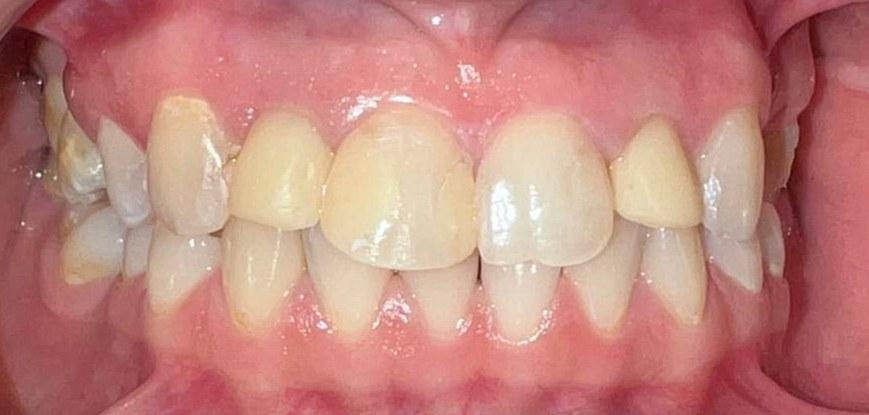
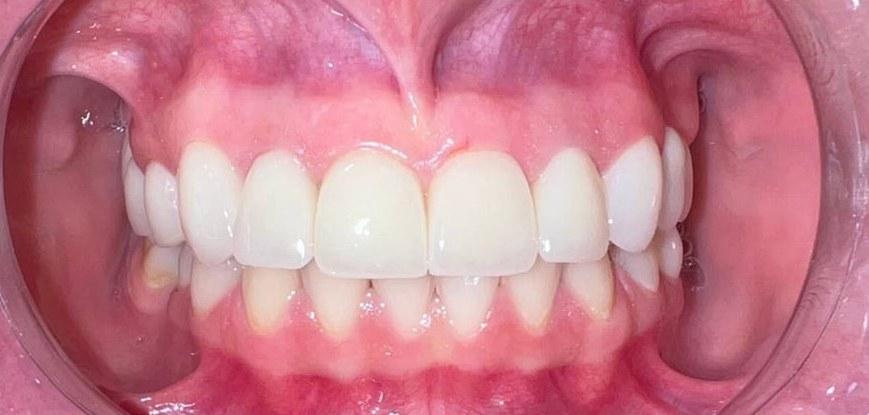
5Treatment results
6FAQ
No. The tooth is prepared under local anesthesia: first a gel, then an injection with SuperPen or the VibraJect attachment, so you barely feel the injection itself. Classic anesthesia is also available. Afterwards there may be slight sensitivity, which passes quickly.
With good care, many years. It is important to brush at home, come for check-ups and have professional hygiene regularly. Crowns, inlays and dentures come with a warranty; the terms are set out in the contract.
An inlay is made in the lab from a scan of the tooth, so it fits more precisely and is stronger than a large filling. It is used when a significant part of the tooth is damaged but the walls are still strong.
Yes, the tooth is carefully shaped so the crown fits and is the same size as the neighboring teeth. Less enamel is removed for an inlay or a veneer.
Yes, after root canal treatment a crown is often the best way to protect the tooth: without the nerve it becomes more brittle. Sometimes a post is placed first or the base of the tooth is rebuilt.
Yes. For veneers and front teeth we make a mock-up: a model of the future teeth that you can try on in your mouth and adjust the shape if needed.
It depends on how many teeth are missing and the condition of the neighboring teeth and bone. The doctor will explain all the options after the examination. If implants suit you, their cost and stages are on a separate page.